
Therapy for First Responders in Colorado: You're Not Alone
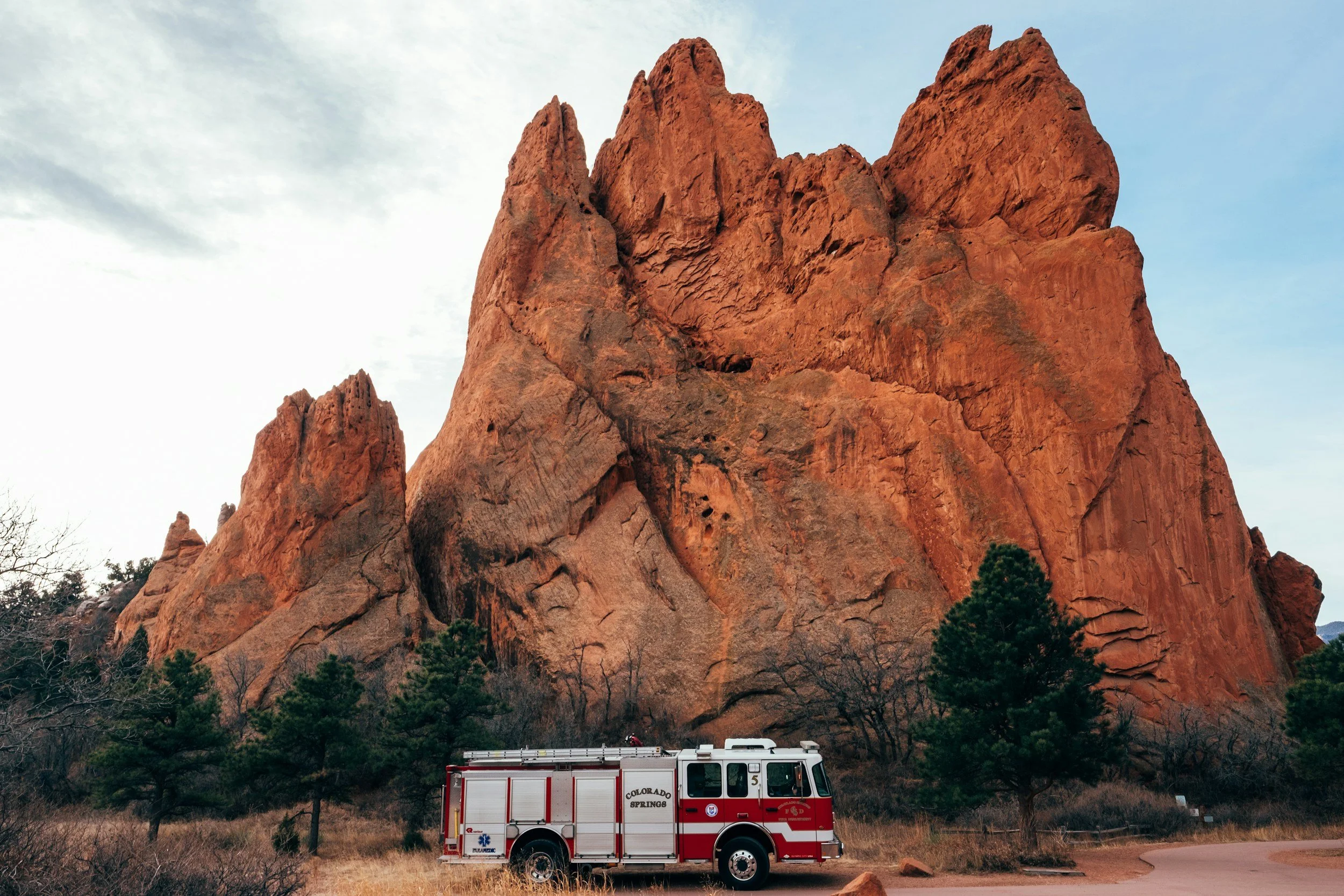
There's one thing I hear from almost every first responder who reaches out to me: "Other people have it way worse than I do."
Maybe you've said it, too. You tell yourself the call wasn't that bad. You tell yourself you're just tired. You keep going, because that's the job.
I offer therapy for first responders in Colorado because I've seen how much you carry, and how rarely you get the chance to set it down. In this post, I want to share what the research says about first responder mental health, why so many people wait to get help, and what actually makes a difference.
You're Not the Only One Feeling This
If you've been struggling, you're far from alone.
The Substance Abuse and Mental Health Services Administration estimates that about 30% of first responders develop conditions like depression or PTSD. That compares with about 20% of the general population (SAMHSA, 2018).
For police officers, a large review of 67 studies and over 270,000 officers around the world found that about 1 in 7 had PTSD, and about 1 in 7 had depression (Syed et al., Occupational and Environmental Medicine, 2020).
I share these numbers not to scare you, but to remind you of something important. What you're feeling is a normal human response to an abnormal amount of stress. It's not a personal failure.
A review of first responder research found that about 1 in 3 first responders held stigma-related worries about mental health care. The most common fears were about confidentiality and how getting help might affect their careers. The biggest practical barriers were scheduling and not knowing where to go (Haugen et al., Journal of Psychiatric Research, 2017).
Those concerns make complete sense. Here's how I handle each one:
"Will my department find out?"
What you share with me stays between us. I don't contact your department, chief, or supervisor unless you give me written permission. We'll go over the few legal exceptions to confidentiality, like immediate safety concerns, in our first session so you know exactly where things stand."Will this hurt my career?"
Coming to therapy on your own is private, and it's not the same as a fitness-for-duty evaluation. Taking care of your mental health is part of staying good at your job for the long haul."I can't keep regular appointments with my schedule."
I get it. Rotating shifts and overtime make it hard to plan. I offer telehealth anywhere in Colorado, so you can meet from home, your truck, or anywhere private. Longer intensive sessions are also an option if fewer, more focused appointments work better for you."I don't even know where to start."
You can start with a free 15-minute phone call. No paperwork, no commitment. Just a conversation.
Why So Many First Responders Wait to Get Help
Sleep is often the first thing to go. A review of 28 studies with more than 100,000 first responders found that about 3 in 10 had insomnia, and about 3 in 10 had shift work disorder (Huang et al., Journal of Global Health, 2022).
When you don't sleep, everything feels heavier. You're more irritable, it's harder to focus, and the hard calls stick with you longer. Part of our work together often includes practical tools for winding down after a shift, quieting a racing mind at night, and helping your body feel safe enough to rest.
When Sleep Stops Working
Here's the hopeful part. Trauma therapy works, and it works for first responders.
A 2026 review of treatments for first responders found that EMDR and cognitive behavioral therapy (CBT) had the most consistent evidence for reducing PTSD symptoms (Jebreel et al., International Journal of Emergency Medicine, 2026).
In one randomized study, active-duty first responders received just two 60-minute EMDR sessions. Their work-related PTSD symptoms and anxiety dropped significantly. Even more striking, those improvements held 90 days later, while they were still going out on difficult calls (Jarero et al., Journal of EMDR Practice and Research, 2019).
That's one reason I use EMDR so often with first responders. You don't have to describe every detail of a call out loud, and you don't have to leave the job to start feeling better.
What Actually Helps: The Research on Trauma Therapy
How I work with first responders
Every person I work with is different, but here's what you can count on:
I speak plainly. No psychobabble. We'll talk like two people trying to figure something out together.
You set the pace. We won't dive into hard calls until you have tools to feel steady first.
I won't make you rehash everything. EMDR lets us work through tough memories without you having to retell them in detail.
We can get outside. If sitting still and talking feels hard, we can walk and talk on mountain trails near Evergreen. Summit, my therapy dog, can come too. Learn more in Outdoor Therapy in Evergreen, CO.
I care about your whole life. The job doesn't just affect you at work. We can talk about your relationships, your family, your sleep, and how to actually be home when you're home.
Learn more about Therapy for First Responders with Tess Prince Harris, LPC
Resources for First Responders
If you'd like to read more on your own time, here are a few resources I trust:
The Code Green Campaign is a mental health education and advocacy group for all first responders, including firefighters, EMS, dispatch, police, corrections, and search and rescue. It also has a database of first responder-friendly mental health resources.
SAMHSA: First Responders, Behavioral Health Concerns, Emergency Response, and Trauma is a research summary on the mental health challenges first responders face and what helps.
The Ruderman White Paper on Mental Health and Suicide of First Responders is an eye-opening report on why first responder mental health deserves more attention and support.
Safe Call Now offers crisis support for first responders and their families, by people who understand the work. Call (206) 459-3020.