
Outdoor Therapy in Evergreen, CO: Heal With a Therapy Dog
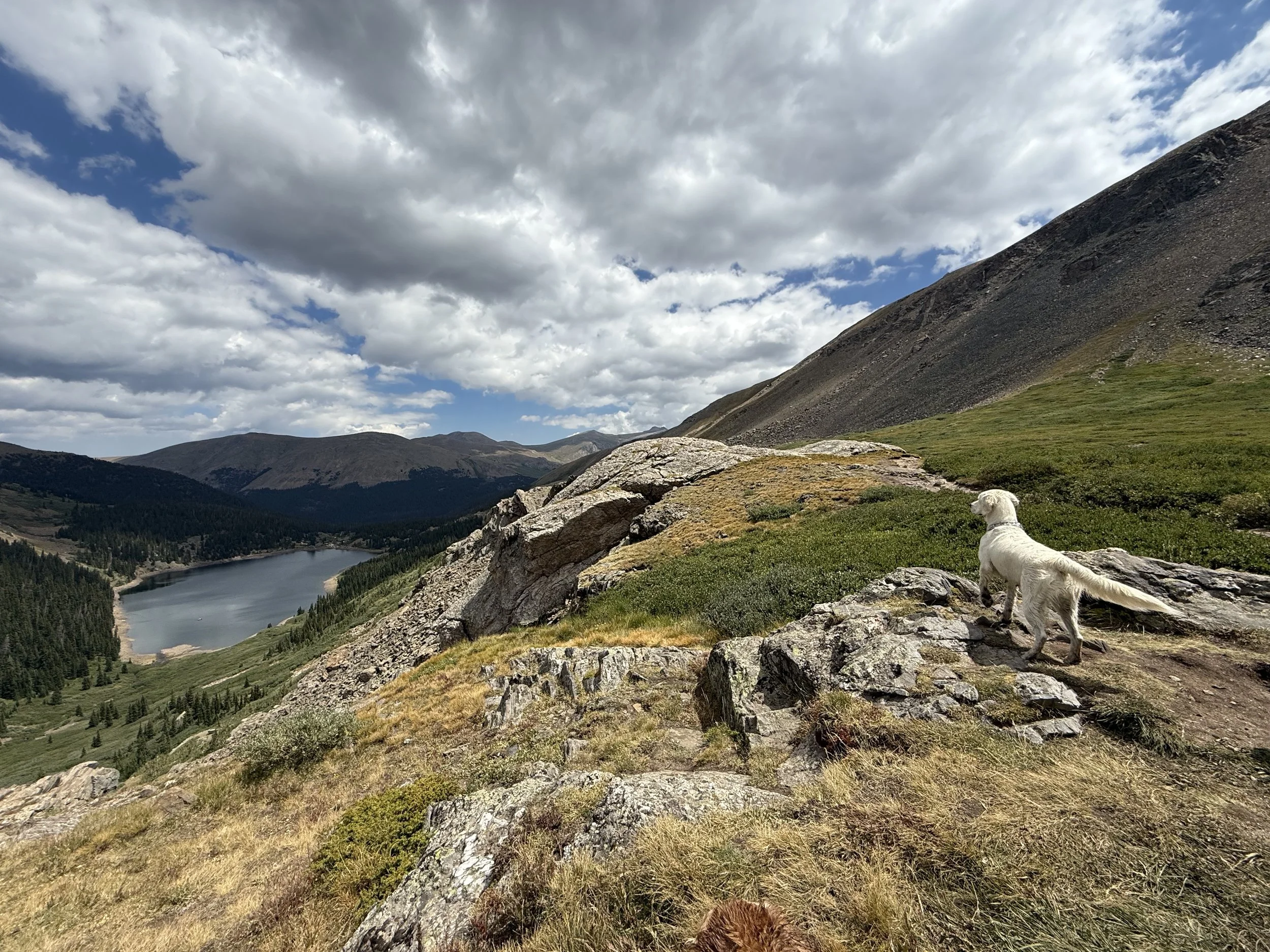
Picture this. You're walking a quiet trail outside. The ground crunches under your boots, and the pines smell warm in the sun. A golden retriever trots a few steps ahead, then circles back to check on you. You start talking about something you haven't said out loud in years, and somehow, out here, it feels possible.
That's what outdoor therapy in Evergreen, CO can look like. And it's not just a nice idea. There's a growing body of research showing why nature and animals can help people heal from trauma, anxiety, and stress.
Here's what the science says, and what it means for you.
Your Brain on a Trail
Have you ever noticed how your thoughts loop when you're stressed? The same worry, the same memory, over and over. That's called rumination, and it's closely tied to anxiety and depression.
A well-known Stanford study tested this directly. Participants took a 90-minute walk in either a natural setting or a busy urban one. Only the nature walkers showed less rumination and less activity in a brain region linked to it (Bratman et al., PNAS, 2015). The city walkers saw no change.
That's one reason my in-person sessions happen outside. When your mind gets a break from looping, there's more space to actually work through what's underneath.
Stress isn't only a feeling. It lives in your body, too. One of the main stress hormones is cortisol, and when it stays high for too long, it can leave you feeling wired, exhausted, and on edge.
In a University of Michigan study, people spent short stretches of time in nature, at least three times a week, for eight weeks. Their cortisol dropped by about 21% per hour beyond its normal daily decline. The biggest benefit per minute came at 20 to 30 minutes (Hunter et al., Frontiers in Psychology, 2019).
A much larger study of nearly 20,000 people found that those who spent at least 120 minutes a week in nature were more likely to report good health and high well-being. It didn't matter if that time came all at once or in smaller visits (White et al., Scientific Reports, 2019).
A single 90-minute outdoor session gets you most of the way to that weekly goal.
Nature Lowers Stress in Your Body, Not Just Your Mind
The Research on Nature-Based Therapy
This is where it gets exciting. Researchers have also studied structured, nature-based programs, not just casual time outdoors.
A 2021 review of 50 studies found that nature-based activities, including nature-based therapy, improved depressive mood and anxiety and boosted positive feelings. The most effective programs ran for 8 to 12 weeks, with sessions of 20 to 90 minutes (Coventry et al., SSM Population Health, 2021).
And in 2026, one of the largest analyses ever done pulled together 116 reviews covering 3,870 studies. It found that nature-based interventions meaningfully reduced anxiety and depression compared with control groups (Saeedy Robat et al., Nature Human Behaviour, 2026).
Movement matters, too. An analysis of 10 studies on "green exercise," meaning physical activity in nature, found improvements in both mood and self-esteem. People with mental health challenges saw some of the biggest gains in self-esteem, and being near water boosted the effects even more (Barton & Pretty, Environmental Science & Technology, 2010).
Why a Dog Changes the Conversation
Now add Summit to the picture.
When you spend time with a friendly animal, your body can shift out of "threat mode." Researchers believe oxytocin, sometimes called the bonding hormone, plays a part. Interacting with animals has been linked to lower stress hormones, lower heart rate, and more trust and calm (Beetz et al., Frontiers in Psychology, 2012).
The research on anxiety is especially strong. A summary by the American Academy of Family Physicians gave pet therapy its highest rating of evidence for reducing anxiety. It was based on a meta-analysis of 28 studies with more than 1,300 people, most of them involving dogs (American Family Physician, 2024).
For trauma, a 2021 review of 41 studies found that animal-assisted interventions helped reduce both PTSD and depression symptoms, with results similar to standard PTSD therapy. The authors noted that more high-quality research is still needed (European Journal of Psychotraumatology, 2021).
Researchers have studied service dogs for veterans, too. In an NIH-funded trial of 156 veterans and service members with PTSD, those paired with service dogs had lower PTSD severity, anxiety, and depression after three months than those still on the waitlist (National Institutes of Health, 2024). Summit is a therapy dog, not a service dog, but this study adds to growing evidence that the bond between people and dogs can support healing.

Take the First Step Outside
The research is clear. Time in nature and time with animals can help your mind slow down, your body settle, and your heart feel a little lighter. You don't have to figure out healing on your own, and you don't have to do it sitting still.
Learn more about Outdoor Therapy & Animal Therapy with Tess Prince Harris, LPC
120 minutes a week in nature: White, M. P., Alcock, I., Grellier, J., Wheeler, B. W., Hartig, T., Warber, S. L., Bone, A., Depledge, M. H., & Fleming, L. E. (2019). Spending at least 120 minutes a week in nature is associated with good health and wellbeing. Scientific Reports. Read the study
Nature-based interventions for stress, anxiety, and depression: Saeedy Robat, E., Bayazi, M. H., Nayyeri, M., Yasaghi, A. A., & Taimory, S. (2026). A systematic overview and second-order meta-analysis of nature-based interventions for stress, anxiety and depression. Nature Human Behaviour. Read the study
Animal-assisted interventions for PTSD: Effectiveness of animal-assisted interventions for children and adults with post-traumatic stress disorder symptoms: A systematic review and meta-analysis (2021). European Journal of Psychotraumatology. Read the study